Aix-en-Provence
A city of Roman water, civic elegance, and the Provençal light that shaped Cézanne's eye.
Central idea
Aix proves that Provence does not need a shoreline to feel Mediterranean. Its identity comes from light, water, stone, markets, olive oil, wine, public squares, and a civic rhythm that lets daily life unfold outdoors.
Aix-en-Provence, often simply Aix, is one of inland Provence's defining cities. It is neither a seaside extension of Marseille nor a village postcard. It is a city of Roman water, legal and university life, aristocratic streets, markets, music, painting, and measured Mediterranean ease.
The strongest reading of Aix begins with four forces: water, stone, light, and Cézanne. Water points to Aquae Sextiae, thermal springs, and the fountains that still shape the city. Stone appears in hôtels particuliers, churches, old-town lanes, and the measured order of Quartier Mazarin. Light settles on Cours Mirabeau, market squares, plane trees, and the limestone profile of Sainte-Victoire. Cézanne joins those elements into the artistic geography that made Aix visible far beyond Provence.
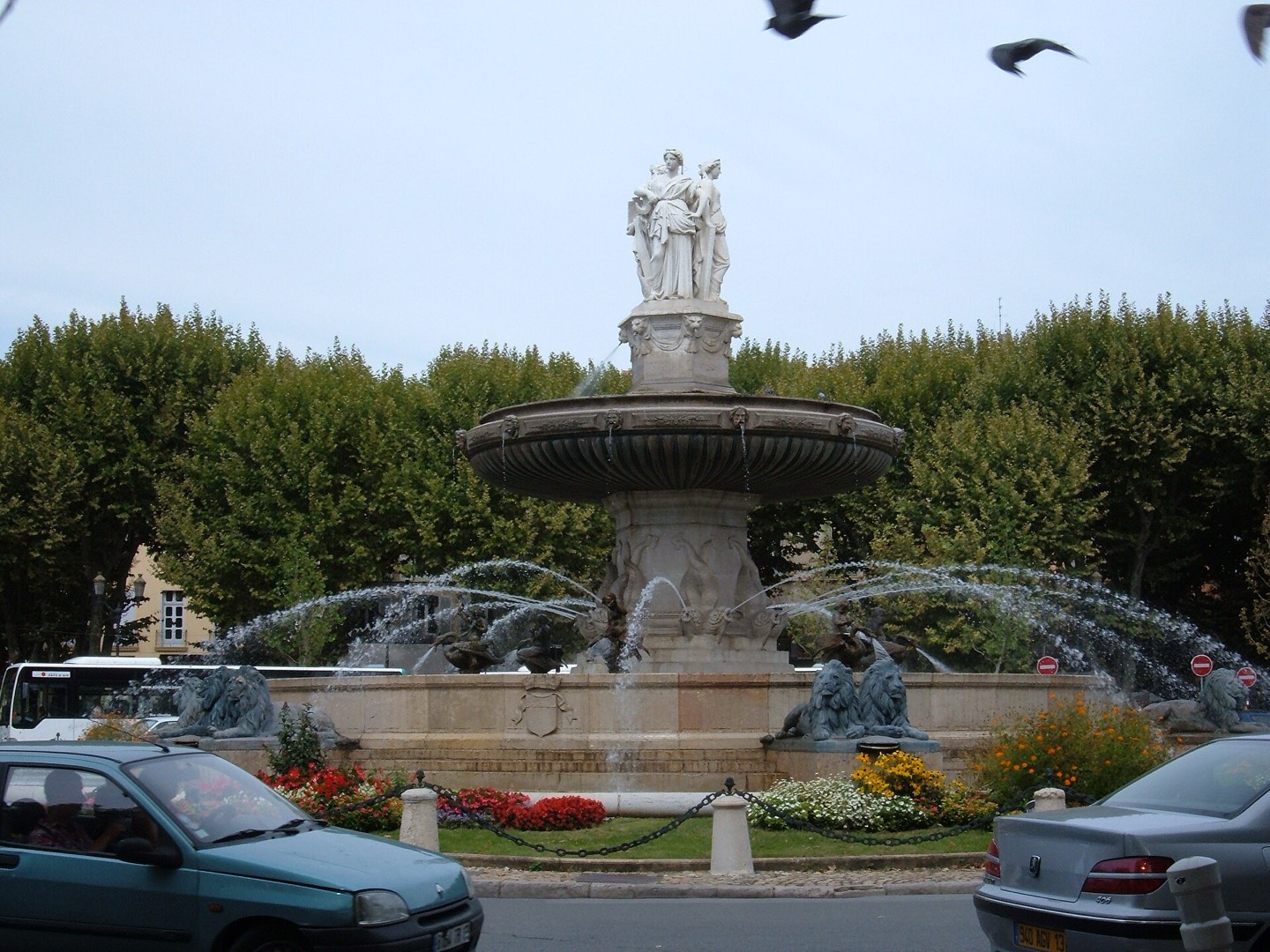
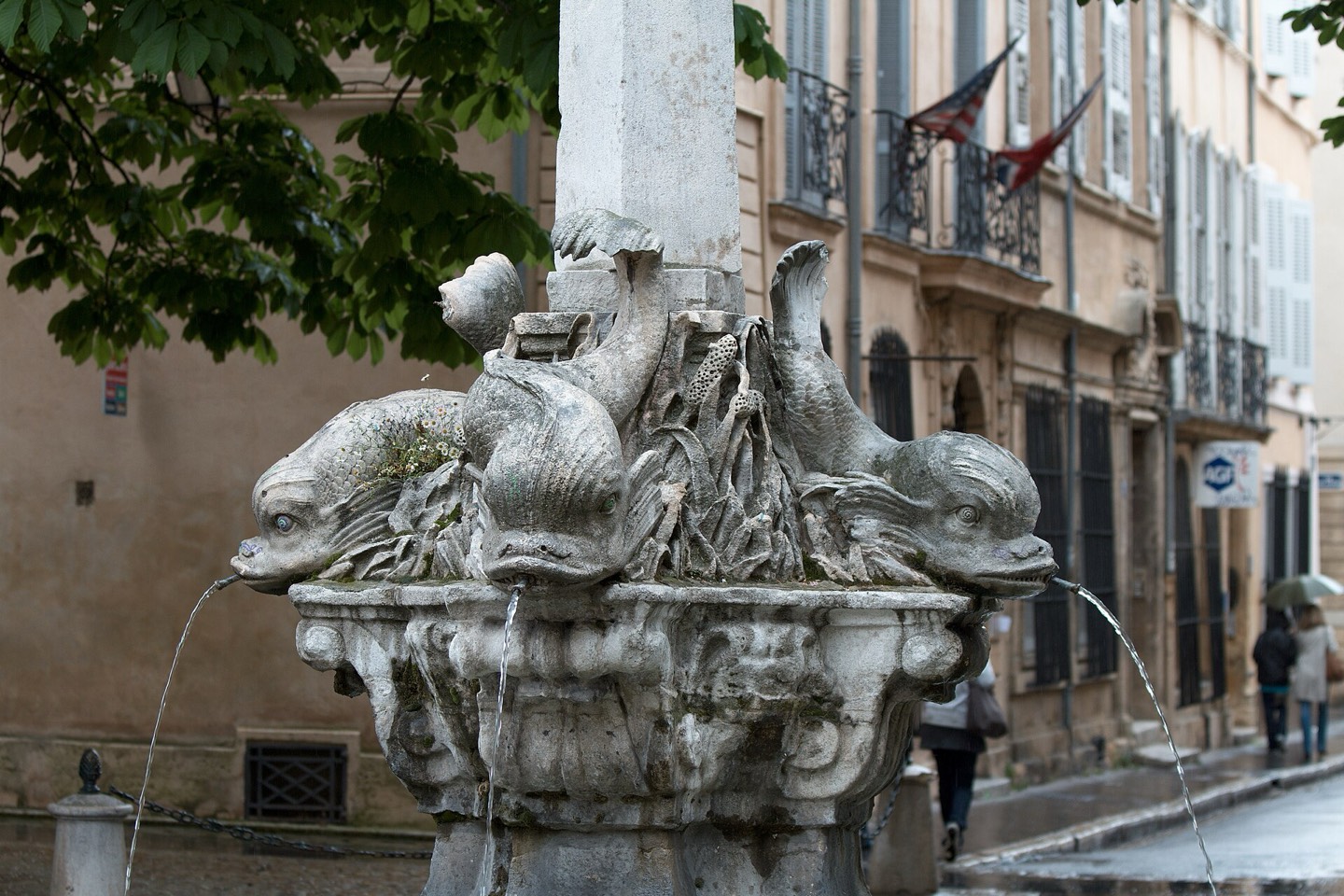
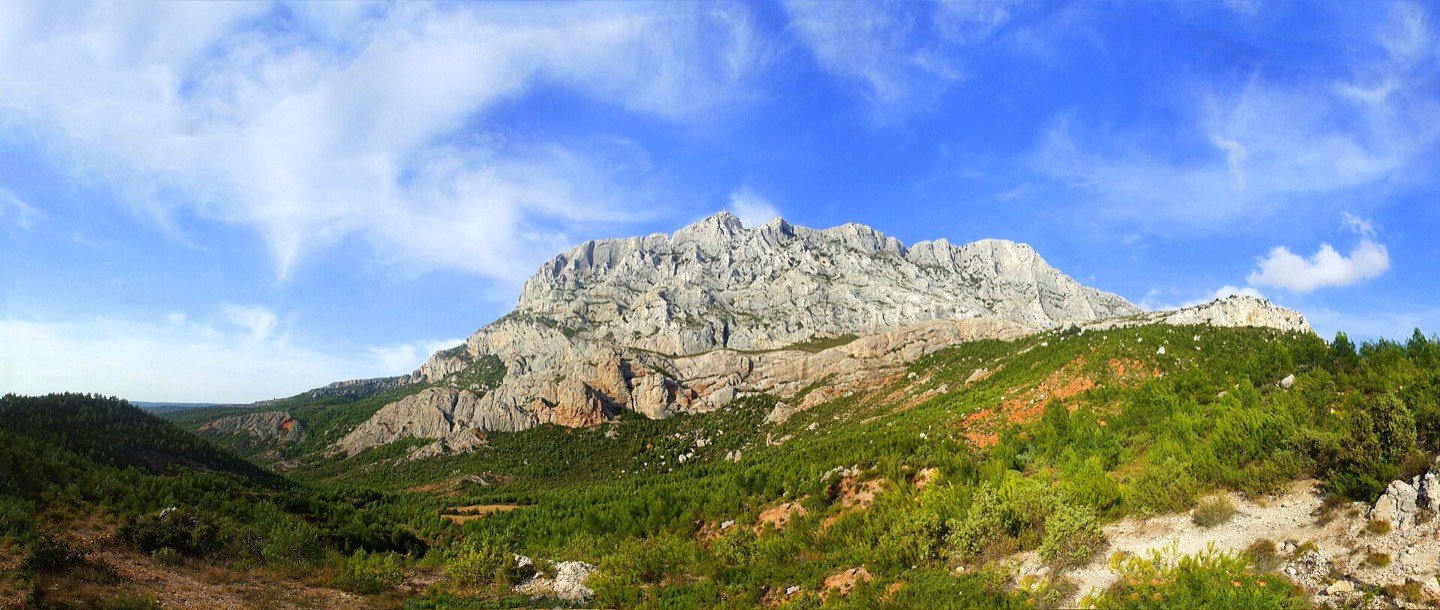
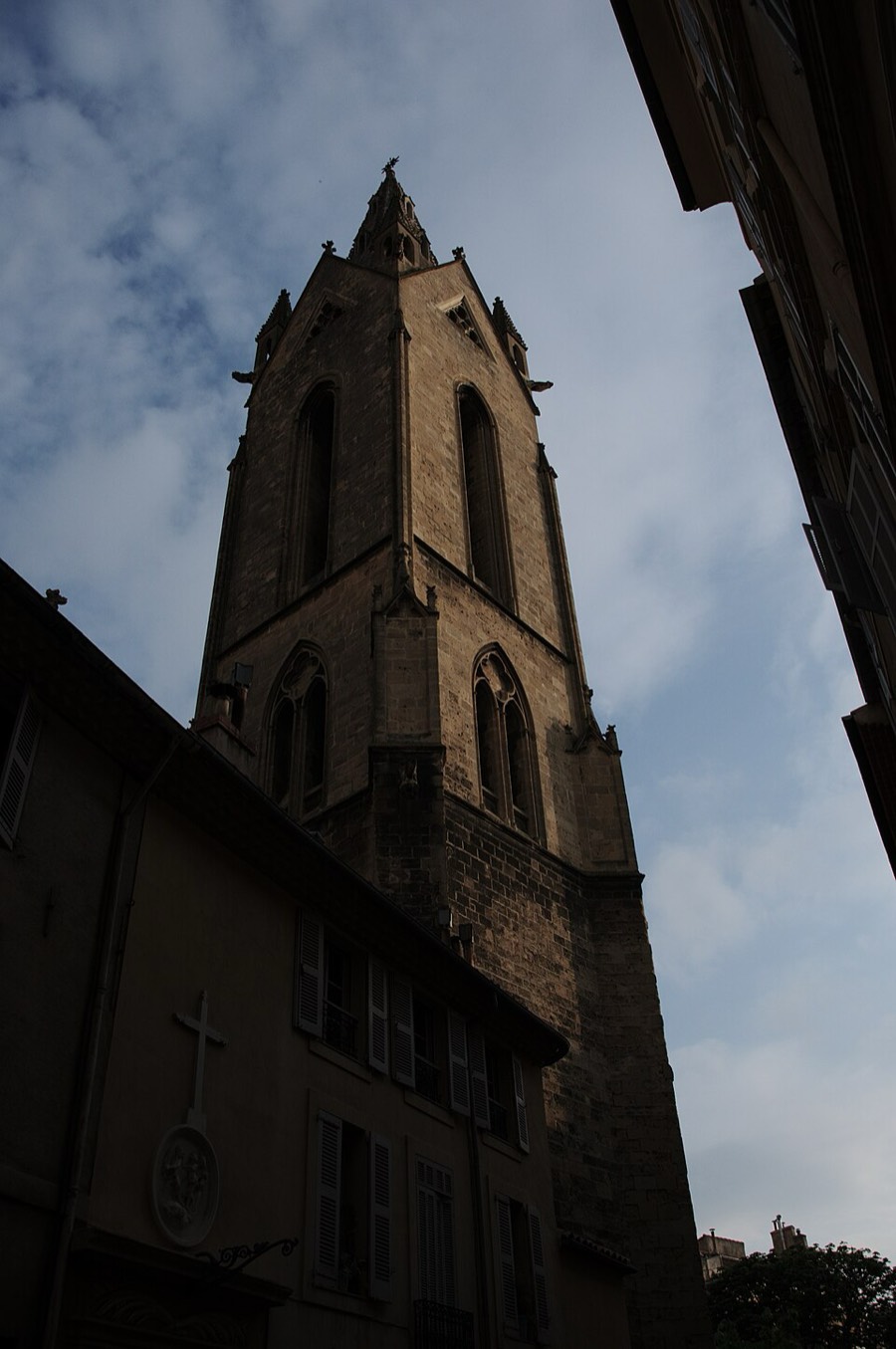
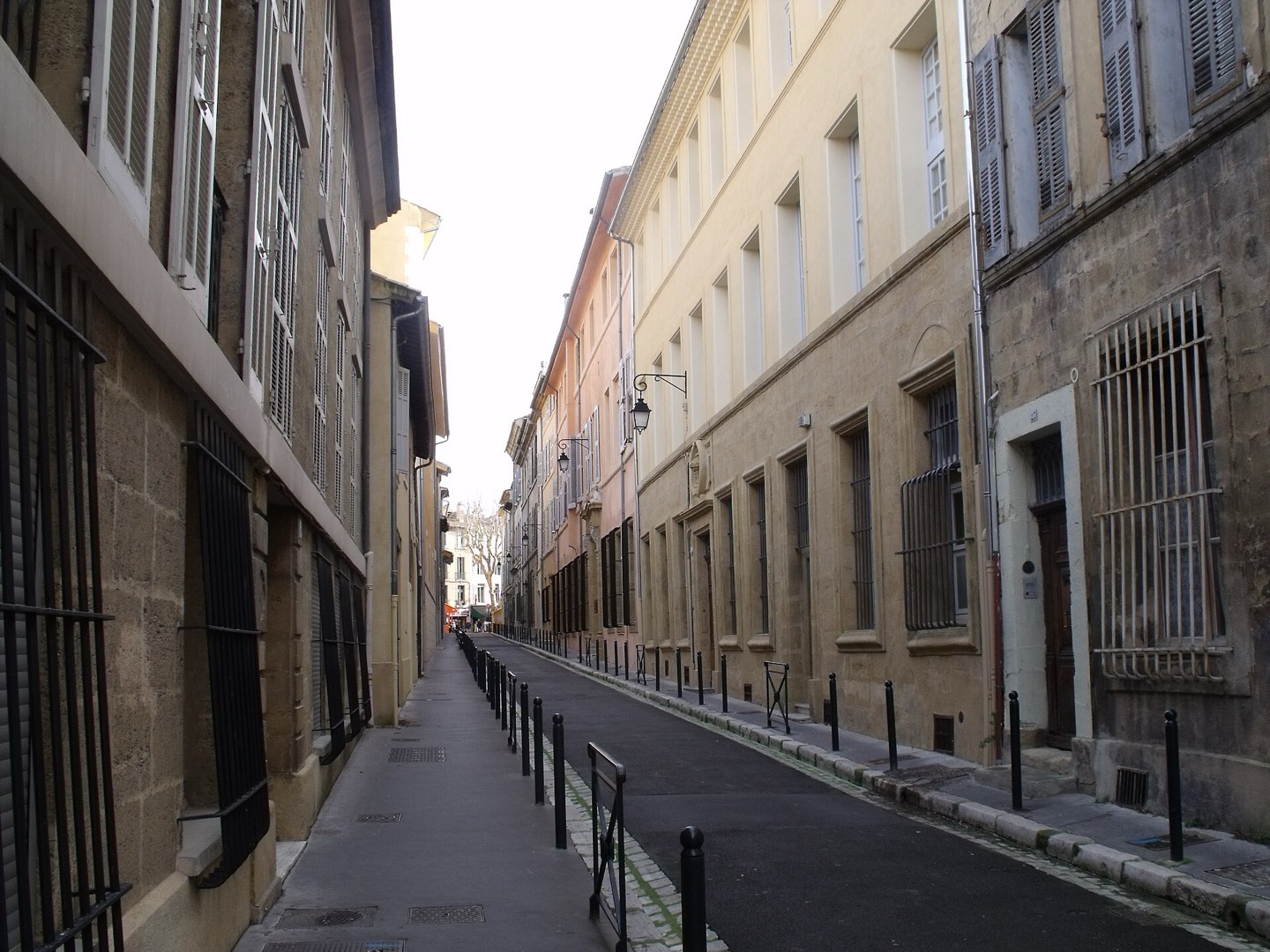
Water, stone, mountain, and old-town scale.
The visual system uses locally served, attributed open-license photography so the guide has real Aix signals without unclear stock usage.
Place identity and geography
Aix-en-Provence sits in southern France, in Provence-Alpes-Côte d'Azur, within the Bouches-du-Rhône department north of Marseille. It is an inland historic city rather than a coastal resort, but its climate, food, light, and public life are unmistakably Mediterranean.
As a destination type, Aix is an urban Provence city with lived-in depth. It is not a single monument, an archaeological park, or a preserved museum town. Its character comes from the working overlap of old lanes, universities, markets, residences, museums, cafés, workshops, fountains, gardens, and cultural institutions.
The central reading is simple: Cours Mirabeau forms the main civic axis, the old town rises to the north, and Quartier Mazarin gives the south side its 17th-century order. Beyond the center are the Arc valley, limestone hills, olive groves, vineyards, and Montagne Sainte-Victoire.
The surrounding landscape is distinctly Provençal: pale limestone, pines, cypress trees, olive groves, vineyards, garrigue, dry Mediterranean vegetation, and intense light. Spring and autumn often show Aix at its most legible, when markets, plane trees, courtyards, and walks are not overwhelmed by summer heat.
Historical arc
Before the Roman city, the area was linked to Entremont, a fortified Salyen oppidum on a height north of modern Aix. The decisive urban shift came in the late second century BC, when the Romans settled near thermal springs and founded Aquae Sextiae.
The Roman name tied the city to Sextius Calvinus and to water. Aix became a colony, a route point between Italy and Spain, an urban center, and a spa town. Its name still carries the deeper origin of the place: Aix began as a city of waters.
As Christianity spread, Aix gained a new role as an episcopal and later archiepiscopal seat. Cathédrale Saint-Sauveur compresses that duration into architecture, with early Christian, Romanesque, Gothic, Renaissance, and Baroque layers.
In the 15th century, René d'Anjou, the Good King René, became closely tied to Aix and the courtly life of Provence. After Provence was integrated into France, Aix retained a strong administrative identity through institutions such as the Parlement de Provence.
In the 17th century, the city expanded through Cours Mirabeau and Quartier Mazarin. In the 19th century, Paul Cézanne was born, lived, and worked in Aix, turning the city and Sainte-Victoire into one of the decisive landscapes of modern painting.
Local memory, rituals, and traditions
Aix is less a city of formal legend than a city of accumulated local memory. Its first recurring story is water: thermal springs, public fountains, Fontaine de la Rotonde, Fontaine d'Eau Chaude, and the smaller corner fountains that make the old town feel inhabited rather than staged.
A second tradition is the calisson d'Aix, the almond-shaped confection associated with almonds and candied melon or fruit. Its origin story is layered, but local memory often connects it with René d'Anjou and the courtly culture of Provence.
The modern mythology of Aix is Cézanne and Sainte-Victoire. The mountain is not only scenery. Through Cézanne's repeated paintings, it became an artistic problem and a modern symbol: the same form studied under different light, structure, and pressure.
Aix also belongs to the broader Provençal world of markets, olive oil, vines, herbs, santons, tables in the square, public fountains, midday light, and a culture that does not fully separate beauty from daily use.
Monuments, architecture, and culture
Cours Mirabeau is the most recognizable urban stage in Aix: plane trees, fountains, cafés, historic facades, and the broad line between the old commercial center and Quartier Mazarin. It is more than a handsome street; it is the city's public room.
Quartier Mazarin presents Aix as a city of order, proportion, and social hierarchy. South of Cours Mirabeau, its hôtels particuliers, quiet facades, and 17th-century grid reveal a more restrained urban Provence than the familiar imagery of markets and village color.
Cathédrale Saint-Sauveur is one of Aix's essential monuments. Its fabric gathers several periods, and inside it the Triptyque du Buisson Ardent by Nicolas Froment remains one of the works most closely tied to René d'Anjou and the city's artistic memory.
Hôtel de Caumont expresses the aristocratic residence of Aix: courtyards, salons, staircases, gardens, and refined social ritual. Musée Granet is the city's main museum institution, with collections from the Renaissance to modern art and particular importance through its Cézanne context.
The Atelier de Cézanne, Jas de Bouffan, Bibémus quarries, and Sainte-Victoire should be read as one cultural geography. They are not isolated Cézanne stops; they form the triangle of city, home, and landscape that explains why Aix became central to modern art.
Fondation Vasarely adds a strong 20th-century dimension. Aix is not limited to 17th- and 18th-century Provence or to Cézanne. It also has a modern, abstract, optical, and architectural story.
- Cours Mirabeau and Fontaine de la Rotonde: the main civic threshold into Aix.
- Quartier Mazarin and Hôtel de Caumont: the aristocratic city of the 17th and 18th centuries.
- Saint-Sauveur: early Christian, Romanesque, Gothic, and Renaissance memory.
- Musée Granet and Cézanne: the museum side of Aix's painting identity.
- Atelier, Jas de Bouffan, Bibémus, and Sainte-Victoire: the geography of Cézanne's vision.
- Fondation Vasarely: 20th-century Aix and optical art.
Nature, Sainte-Victoire, and Provençal light
Sainte-Victoire is the natural emblem of Aix. Limestone, luminous, and sharp-edged, it rises east of the city and dominates the horizon in a way that helps explain why Cézanne returned to it again and again.
The Concors-Sainte-Victoire area is recognized as a Grand Site de France and should be approached with more care than a simple hiking note. It is a meeting point of geology, painting, light, protected landscape, and Provençal identity.
The Bibémus quarries are former stone quarries set in pine country, with ochre tones, geometric volumes, and rock that already seems arranged for painting. There, the traveler can understand how Cézanne could read landscape as planes, color, and structure.
Around Aix are olive groves, vineyards, dry-stone walls, small estates, pines, and hills. Nature is not detached from the city; it is the city's wider setting. Aix becomes fully legible when the traveler first walks Cours Mirabeau and then sees Sainte-Victoire on the horizon.
Local culture and way of life
Daily culture in Aix is urban, Provençal, and sensory. The city does not impose itself through size, but through rhythm: morning markets, coffee under plane trees, walks through old lanes, bookshops, museums, students, small squares, fountains, and civility without stiffness.
Markets are essential. Central squares fill with color, sound, flowers, food, books, antiques, and regional products. In Aix, the market is not only an attraction; it is social infrastructure.
The food culture of Aix and the surrounding countryside rests on olive oil, almonds, fruit, vegetables, herbs, wine, honey, bread, cheese, and Mediterranean preparations. The most distinctive sweet is the calisson d'Aix, while the countryside around the city is tied to olive oil and vineyards.
Festival d'Aix-en-Provence gives the city a serious musical identity. An evergreen guide does not need to repeat a live calendar; it needs to place the festival as an institution connecting Aix with European opera, music, and stage culture.
Move from Roman waters to Cézanne's Sainte-Victoire.
Aix is a cultural landscape, not a loose Provence checklist: water, civic form, painting, food, and protected landscape all shape the experience of the city.
The city of water
Aquae Sextiae, thermal springs, Fontaine de la Rotonde, the warm moss-covered fountain, and the smaller fountains explain why Aix begins with water.
Aristocratic and civic Aix
Cours Mirabeau, Quartier Mazarin, hôtels particuliers, Hôtel de Caumont, Saint-Sauveur, squares, markets, and the city of law, learning, and civic families.
In Cézanne's footsteps
Musée Granet, Atelier de Cézanne, Jas de Bouffan, Bibémus, Terrain des Peintres, and Sainte-Victoire as a working landscape of painting.
The taste of Provence
Calissons d'Aix, olive oil, vineyards, herbs, markets, almonds, and the everyday cooking of inland Provence.
Nature and light
Sainte-Victoire, Concors, Bibémus, pines, garrigue, vineyards, walking, and the Mediterranean landscape that helped make Aix a workshop for modern vision.
Use the cultural reading to make better trip decisions.
The next Aix layer converts identity into planning: where to stay, how to pace the first trip, what works without a car, and how to handle Cézanne, Sainte-Victoire, markets, and food.
Where to stay in Aix-en-Provence for a first trip
Compare the best places to stay in Aix-en-Provence by old-town walkability, Cours Mirabeau access, station logistics, parking pressure, and day-trip plans.
A first-trip Aix-en-Provence itinerary without rushing Provence
A conservative first-trip Aix-en-Provence plan that balances the old town, Cézanne, Sainte-Victoire, markets, museums, and realistic Provence day trips.
Aix-en-Provence without a car: what works and what becomes fragile
Decide whether you need a car in Aix-en-Provence by weighing its walkable centre, arrival logistics, selected transfers, Sainte-Victoire and Provence day trips.
Cézanne and Sainte-Victoire: how to make the Aix art route coherent
Read Cézanne in Aix through the studio, Musée Granet, Jas de Bouffan, Bibémus, Terrain des Peintres, and Sainte-Victoire without reducing them to isolated stops.
Markets, calissons, olive oil, and the food rhythm of Aix
Make Aix-en-Provence markets, calissons, olive oil, wine, cafes, and Provençal cooking part of the trip rather than a loose food checklist.
Tous Courts 2026: a film break in Aix-en-Provence
Plan Tous Courts in Aix-en-Provence on 1–5 December 2026: screening languages, a walkable stay, station transfers and time for winter city visits.
Official sources hold the current facts.
This guide is cultural and evergreen. Opening hours, tickets, access, transport, festival programming, and trail conditions are intentionally left to the official operators.
- Lauves Studio: visitor informationCézanne’s studio, seasonal access, reservations and accessibility.
- Jas de Bouffan: visitor informationCézanne’s family home, seasonal access, reservations and accessibility.
- Sainte-Victoire: autumn trail worksPrieuré–Croix de Provence access during autumn works.
- Bouches-du-Rhône: forest access mapDaily forest-access restrictions during the regulated season.
- Aix-en-Provence TourismDestination-level Aix framing, Cours Mirabeau, markets, Cézanne routes, Sainte-Victoire, and current visitor context.
- Ville d'Aix-en-ProvenceMunicipal context, civic institutions, city-level cultural information, and current public notices.
- Musée GranetMusée Granet collections, Cézanne context, exhibitions, and current museum access.
- Hôtel de Caumont Centre d'ArtQuartier Mazarin mansion context, art-centre programming, and current visitor access.
- Fondation VasarelyVictor Vasarely, optical art, 20th-century architecture, and current foundation visits.
- Festival d'Aix-en-ProvenceFestival identity, opera and classical music context, institutional history, and current programming.
- Grand Site Sainte-VictoireSainte-Victoire landscape protection, trails, access, natural context, and visitor responsibility.
- Huile d'Olive d'Aix-en-Provence AOPAix olive oil PDO, local product identity, agricultural context, and terroir.
- Le Roy René CalissonsCalissons d'Aix craft context, local confectionery tradition, and current visitor/atelier information.
- My ProvenceBouches-du-Rhône destination context, Provence travel framing, and regional cultural references.
- Marseille Provence AirportCurrent air-arrival checks for Aix-en-Provence trips through Marseille Provence Airport.
Continue with the practical Aix guides
Choose where to stay, pace a first trip, test the no-car limits, or plan Cézanne, Sainte-Victoire, markets, and food with the practical pages.